
Ask two people on the Croisette what this coast is called and you may get two answers. English speakers tend to say the French Riviera. The French, and every road sign, say Côte d’Azur. The second name sounds as old as the sea. It isn’t: one man coined it, in one book, in 1887.
So where does the name Côte d’Azur come from, and how did a book title end up on maps, train timetables and the name of a French region? The story starts on a vineyard slope in Burgundy and ends in a winter villa in Cannes.
Before 1887: a coast without a French name 🚂
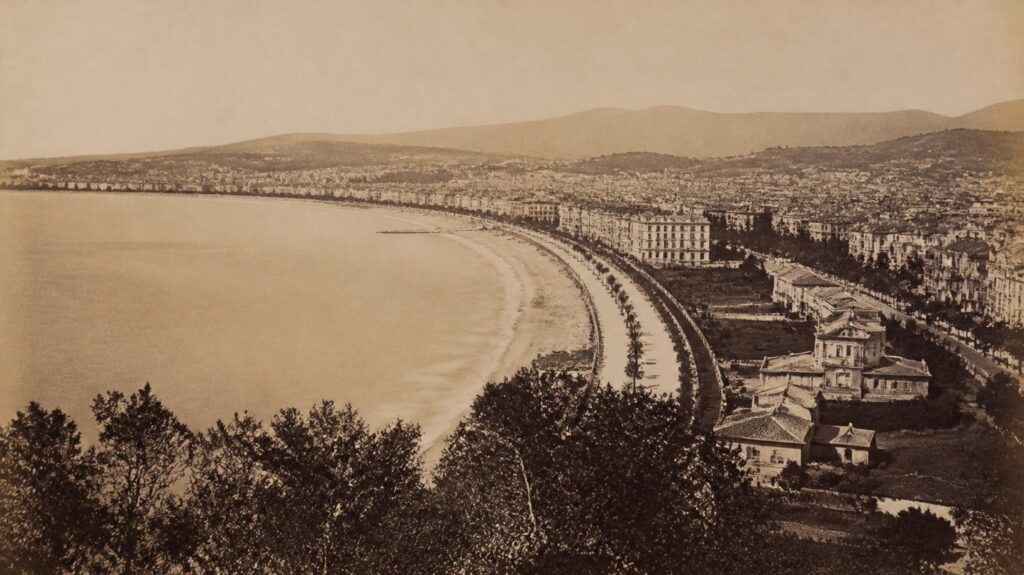
For most of the nineteenth century the coast had no single name in French. Writers spoke of the corniche or the Ligurian beaches. Foreign visitors said « Riviera », an Italian word for coastline borrowed from the Riviera of Genoa next door. The British used it mostly for the stretch between Monaco and the Italian border.
Those British visitors came for the winter, not the beach. In December 1834 Lord Brougham, a former Lord Chancellor travelling to Italy, was turned back at the Var because of cholera. He waited in Cannes, then a fishing village with one inn. He liked it enough to build a villa there, the Château Eléonore-Louise, named after his daughter, and other wealthy families followed. The Cannes municipal archives still hold his letter about the cholera in Provence.
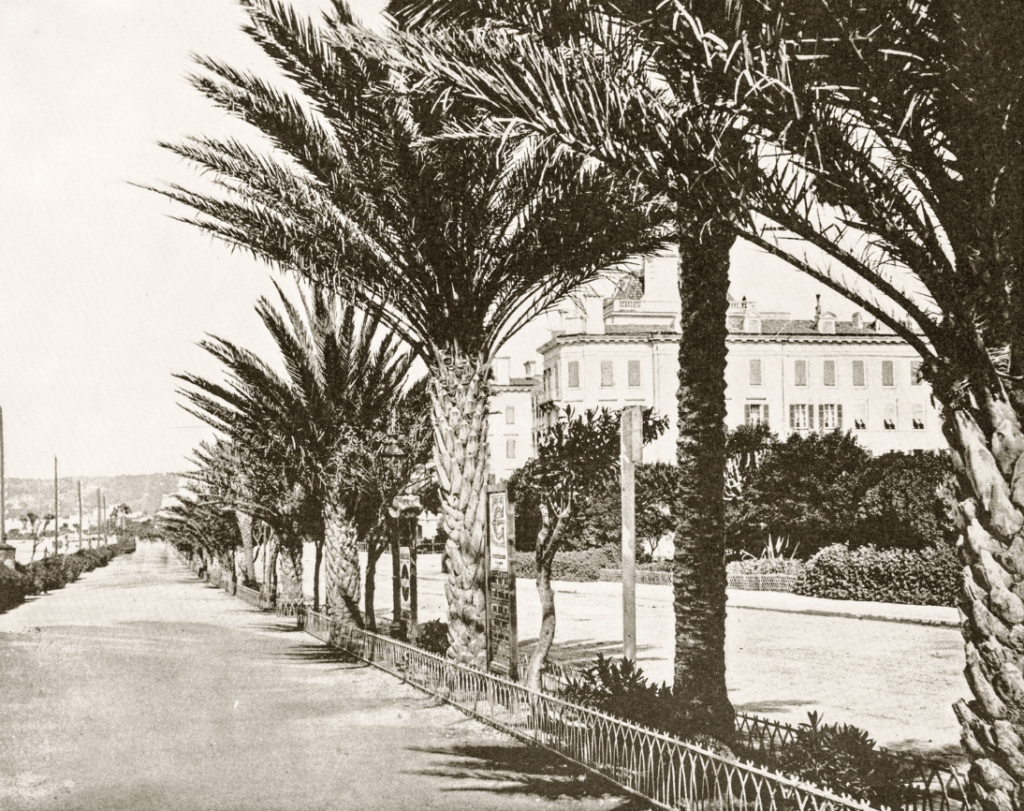
When the railway reached Nice in 1864, the trickle became a flow: about 100,000 visitors arrived the next year. By the 1880s the coast had grand hotels, casinos and royal guests. It still had no French name of its own.
Stéphen Liégeard, a Burgundian in Cannes 🍇
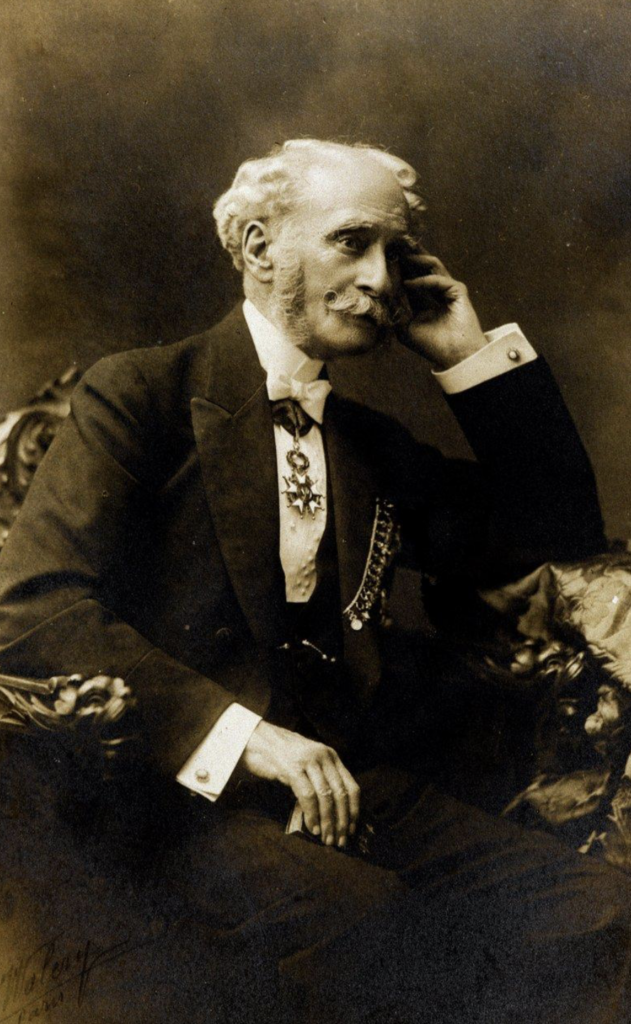
The man who filled that gap was not a southerner. Stéphen Liégeard was born in Dijon on 29 March 1830, in the department of Côte-d’Or, the « golden slope » of the Burgundy vineyards. His father was mayor of Dijon. He trained as a lawyer, became a sub-prefect, then sat in parliament as deputy for the Moselle from 1867 to 1870, according to his record at the Assemblée nationale.
When the Second Empire fell, Liégeard turned to writing. He published poems, then travel books: one on the spa town of Luchon in the Pyrenees (1874), another on the Engadine and the Italian lakes (1878). From the 1870s he spent every winter in Cannes, in a villa his wife inherited in 1875. He knew the coast as a regular does, over many seasons rather than one holiday.
The book that named a coast 📖
In the summer of 1887 Liégeard wrote a book about that coastline. It came out in December 1887 under the title La Côte d’Azur. It reads as a guidebook, a travel journal and a history lesson at once, with a preface by the writer Xavier Marmier, whom Liégeard invites to sail along the shore with him.
His Côte d’Azur was far longer than today’s. It ran from Marseille to Genoa, « from the Château d’If to the palaces of Genoa », as he put it. The Académie française gave the book its Prix Bordin, and the first edition sold out.
Why « azur »? The Côte-d’Or connection 🌊
The name is a play on words. Liégeard took his home department, Côte-d’Or, and swapped the gold for azure, the deep blue of the Mediterranean. Historians see this Burgundian wink as the most likely origin. Liégeard never explained it himself, so it remains an informed guess.
Azure is an old, poetic word for deep blue. Did he mean the sky or the sea? A study published by the Alpes-Maritimes departmental archives argues for the sea. In his preface Liégeard writes of the Tyrrhenian waves, « however azure they may be ». When he describes the winter sky, he dwells on the strength of the light rather than its colour.
How a book title became a place name 🗺️
The timing helped. The historian Marc Boyer argued that the phrase filled a gap with a simple, idyllic image. It also suited a France that had just lost Alsace-Moselle in 1871: the new name skipped over the Var, the river that had marked the border with the County of Nice until 1860.
It spread fast. By 1900 the Joanne guidebook to the region was titled Côte d’Azur, and in 1902 Nice’s tourist office already used the name. Liégeard saw it happen. In the foreword to his second edition in 1894, he wrote that the old names had « melted like snow in the sun » and that « the dictionary has gained a word ».
The Italian half dropped out along the way. Across the border the coast stayed the Riviera ligure, and Côte d’Azur came to mean the French side only. Its western end has never been fixed: depending on who you ask, it starts at Cassis, Toulon, Hyères or Saint-Tropez. Everyone agrees it ends at Menton.
Liégeard died in Cannes on 29 December 1925, aged 95. By then the coast was changing again. In the 1920s American visitors started coming in summer to swim, and the old winter season gave way to the one we know today (the winter light he loved is still there, as our guide to the Indian summer by yacht shows). The name worked just as well for both seasons. In 2009 the regional tourist board even registered « Côte d’Azur » as a trademark.
Côte d’Azur or French Riviera?
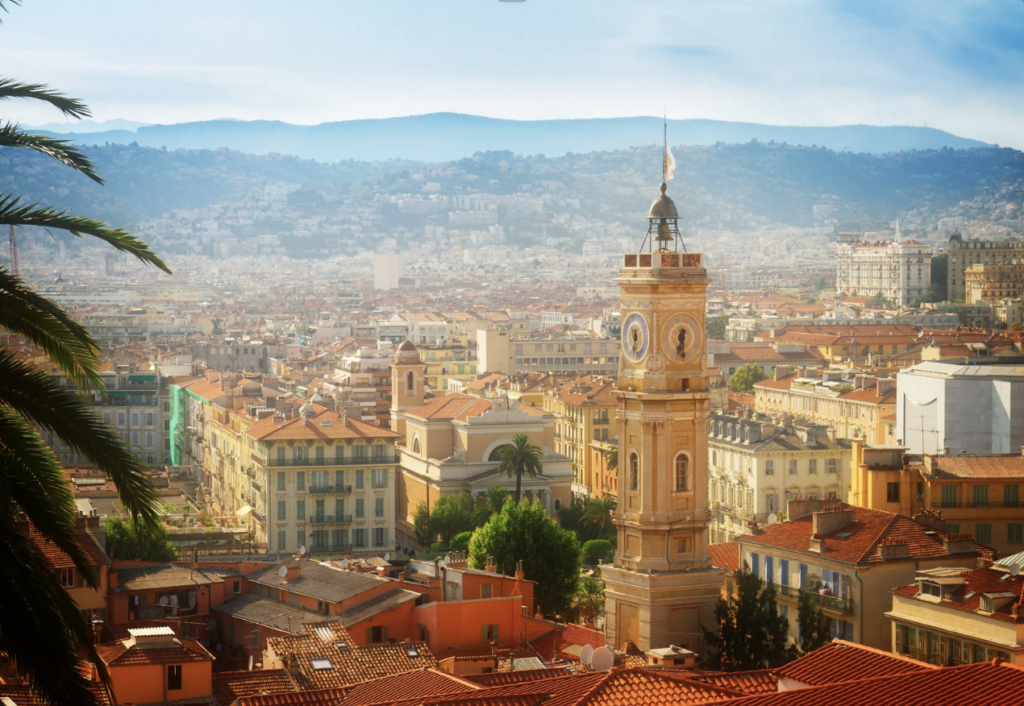
Both are right. « Riviera » is the older term among English speakers, and « French Riviera » is still the usual English name. In French, only Côte d’Azur is used, and it is part of the official name of the region, Provence-Alpes-Côte d’Azur. A retired sub-prefect’s book title now sits on administrative maps.
Seeing the coast from the sea 🛥️
Liégeard asked his reader to picture the coast from a boat, and the sea is still the best place to judge his choice of word. From the water off Cap d’Antibes or the Lérins islands, you see the colour he named and the line of towns that grew from winter retreats into summer resorts. For ideas on where to go, see our five sea routes along the Riviera.
If you would like to follow his route by sea, The Yacht Bliss organises private day charters with a crew on the Côte d’Azur. The Nice Côte d’Azur tourist office also has a good guide to the Belle Époque villas and palaces that date from Liégeard’s time.
FAQ
Who named the Côte d’Azur? The writer and former politician Stéphen Liégeard, in his book La Côte d’Azur, published in December 1887.
What does Côte d’Azur mean? It means « azure coast » or « blue coast ». Azure is an old word for a deep blue, here the colour of the Mediterranean.
Why did Liégeard choose the word azur? He was born in the Côte-d’Or, the « golden slope » of Burgundy. Most historians think he swapped the gold of his home department for the blue of the sea.
Is the Côte d’Azur the same as the French Riviera? Yes. « French Riviera » is the usual English name and Côte d’Azur the French one. Both describe the French Mediterranean coast up to the Italian border.
Where does the Côte d’Azur start and end? There is no official boundary. It ends at Menton, and depending on the source it starts at Saint-Tropez, Hyères, Toulon or Cassis.